Manufacturing Commercial Operations (MCO) in
ServiceNow
Manufacturing is typically defined as machines, plants, and production lines. But for anyone who has ever worked very closely with a manufacturing company, they know that the real complexity is not on the factory floor. It’s in commercial operations. Quotes, contracts, orders, service agreements, warranties, renewals, customer requests, partner coordination—this is where things can get complicated.
Manufacturing Commercial Operations (MCO) in ServiceNow is the solution to this problem.
It’s not a module you “turn on.” It’s a way of doing things that uses the ServiceNow platform to manage the commercial life cycle of manufactured products and services. When done correctly, it integrates sales, operations, service, finance, and partners into a single, continuous process rather than separate groups of people working in silos.
Why Commercial Operations Are So Challenging in
Manufacturing
Manufacturing businesses no longer make and sell simple products. Instead, they make and sell a mix of the following:
- Physical products
- Installation services
- Maintenance contracts
- Spare parts
- Warranties
- Service level agreements
- Upgrades and renewals
Every sale involves a long-term commitment. A product sold today may need to be serviced for the next ten years. A contract signed today may involve multiple business units in different regions.
Historically, these activities are typically fragmented across the following systems:
- CRM systems for sales
- ERP systems for orders
- Email and spreadsheets for approvals
- Ticketing systems for service
- Different systems for partners and vendors
The consequence? Incomplete visibility, delays, manual processes, and unhappy customers.
MCO in ServiceNow is built to integrate all of the above.
What Manufacturing Commercial Operations Means in
ServiceNow
Manufacturing Commercial Operations, or MCO, essentially means managing all activities that occur after “yes”—that is, after the customer has agreed to purchase.
In ServiceNow, MCO is all about:
- Quote-to-order processes
- Contract lifecycle management
- Order orchestration
- Customer onboarding
- Service entitlement management
- Warranty management
- Renewals and extensions
- Partner collaboration
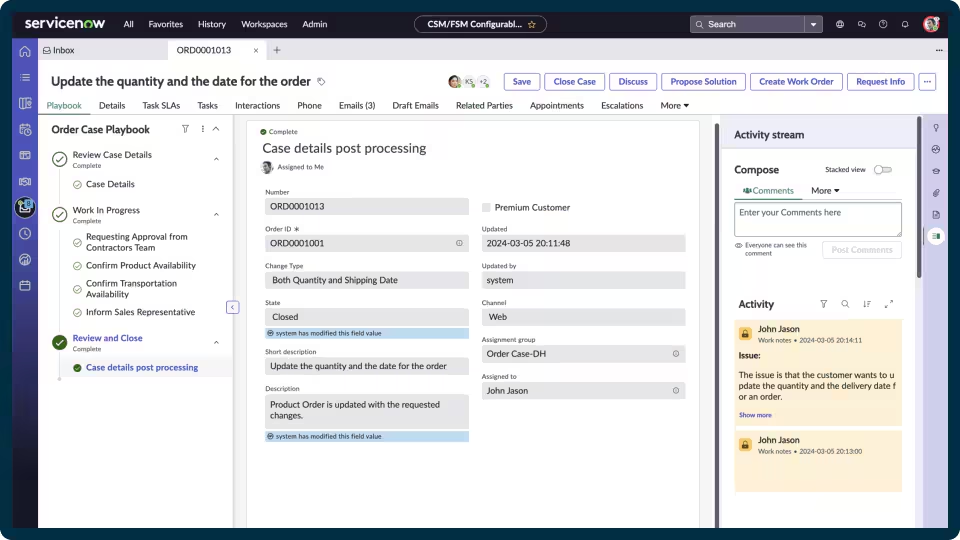
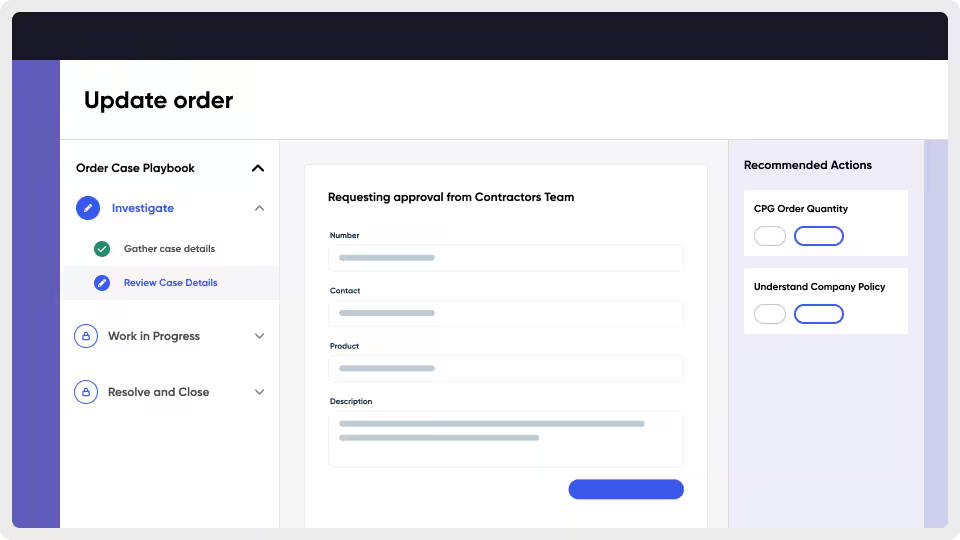
- Issue resolution for commercial operations
Rather than viewing these as distinct issues, ServiceNow views them as part of a single, integrated process.
The Shift from Transactional to Lifecycle Thinking
One of the biggest mind shifts that MCO brings about is the concept of lifecycle ownership.
In many companies, sales is the end of the story, and then the trail goes cold.
With MCO, the sale is a living thing.
ServiceNow enables companies to monitor:
- What has been sold
- What has been promised
- What has been delivered
- What is active
- What is expiring
- What needs renewal
- What issues exist
All in one place.
This is a game-changer in terms of how teams function. Issues are identified much earlier. Customers experience continuity rather than handoffs. Teams within companies no longer point fingers at each other because the information is all in one place.
How ServiceNow Enables MCO
ServiceNow does not replace manufacturing systems such as ERP or PLM. It integrates them.
MCO is created through the integration of several ServiceNow features:
- Customer Service Management (CSM)
- Contract Management
- Order Management workflows
- IntegrationHub
- Flow Designer
- CMDB and asset management
- Case and task management
- Knowledge and self-service
- Partner portals
It becomes the central coordination point between systems, people, and processes.
A Realistic Example
Consider an industrial equipment company.
A customer buys:
- A production machine
- Installation service
- Two years of maintenance
- Spare parts contract
In a typical environment, this would result in emails, spreadsheets, tickets, and manual tracking.
With MCO on ServiceNow:
- The order is recorded and organized
- Contract details are centrally managed
- Service entitlements are automatically generated
- Assets are tracked in the system
- Installation tasks are assigned
- Service SLAs are enforced
- Customer requests are associated with entitlements
- Renewals are tracked long before they expire
Everyone looks at the same data. Nothing falls through the cracks.
Commercial Operations Meet Customer Experience
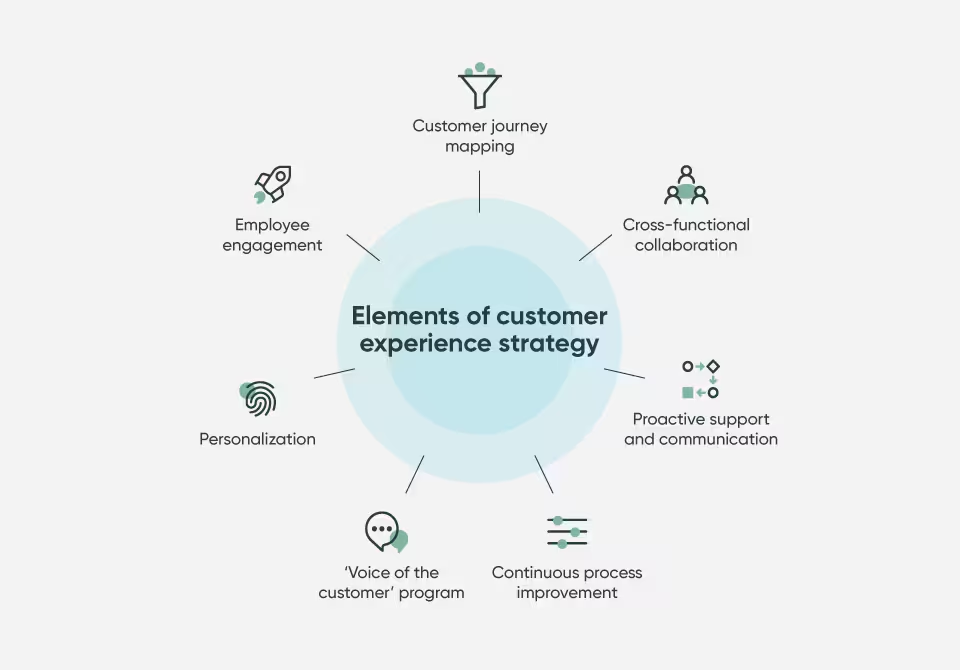
One of the unsung advantages of MCO is the degree to which it enhances customer experience.
Customers don’t care which group in the company their query is addressed to. They simply want the questions answered.
With MCO:
- Service reps can immediately see what the customer owns
- Entitlements are checked automatically
- Warranty information is clear
- Contract information is available
- Service history is visible
This eliminates loops and builds trust. Customers feel understood, not just processed.
Managing Partners Without Losing Control
Manufacturing companies often rely on a large number of distributors, resellers, and service partners.
ServiceNow MCO enables:
- Handling cases for partners
- Secured access to information
- Assigning tasks
- Viewing status
- Tracking performance
Partners operate within predetermined limits while maintaining control for the manufacturing company. This is not easy to do without a common platform.
Why MCO Matters for Revenue Protection
Revenue leakage is a quiet issue in manufacturing.
It occurs when:
- Renewals are missed
- Entitlements are ambiguous
- Services are provided without contracts
- Discounts are applied incorrectly
- Warranty claims are mishandled
MCO prevents this from occurring by making commercial data transparent and actionable. What is sold is what is delivered—and what is delivered is tracked.
MCO Is Not Just for Large Enterprises
Although MCO is highly effective at a large scale, its benefits are not exclusive to massive organizations.
Mid-sized manufacturers will see the benefit of:
- Less manual coordination
- Fewer mistakes
- Faster reaction times
- Improved customer retention
- Clear ownership
As organizations grow, MCO enables processes to be scaled without descending into chaos.
The Cultural Impact of MCO
Perhaps the most underappreciated consequence of MCO adoption is cultural.
- Teams no longer operate in silos
- Data supplants assumptions
- Ownership becomes more defined
- Accountability improves without effort
Organizations shift from reacting to problems to anticipating them.
Final Thoughts
Building Commercial Operations in ServiceNow is not just about technology. It’s about clarity.
- It adds order to complexity
- It adds continuity to customer relationships
- It adds visibility to commercial commitments
In a world that is becoming increasingly service-oriented, customer-focused, and interconnected, managing commercial operations in a disconnected way is no longer feasible.
ServiceNow MCO does not replace your manufacturing systems.
It integrates them.
It orchestrates them.
And gets them to work together.
That’s why MCO is not just another capability—it’s a foundation for modern manufacturing operations.