Technical debt that compounds every year it’s deferred, making each future fix more expensive than the last
We transform legacy platforms into agile, high-performing digital solutions — modern channels, API-driven ecosystems and cloud migration that keep your systems scalable, secure and ready for what’s next.
Technical debt that compounds every year it’s deferred, making each future fix more expensive than the last
Disconnected data trapped in systems that were never built to expose APIs, blocking analytics and AI initiatives before they can even start
Security and compliance risk from unpatched vulnerabilities and access models too rigid to meet current standards
Innovation bottlenecks — new features and integrations take months instead of weeks because the underlying architecture fights every change
A growing skills gap, as fewer engineers are trained on the legacy languages and platforms your business still depends on
A phased transformation that reduces risk instead of betting everything on one disruptive cutover
Cloud-native architecture that scales on demand instead of requiring a hardware refresh every few years
API-led connectivity that lets modern applications, analytics, and AI tools actually talk to your core systems
Reduced technical debt and lower long-term maintenance cost, not just a one-time fix that decays again in three years
A foundation genuinely ready for AI adoption, not infrastructure that blocks it
Before touching a line of code, we map your application estate, chart dependencies, and identify which components actually drive business value versus which ones are just expensive to maintain. Most failed modernization projects fail here — in inadequate planning, not execution.
Containerizing monolithic applications and gradually refactoring into scalable, independently deployable services, so updates to one part of the system don’t put the rest at risk.
Wrapping legacy core functionality in modern APIs so it can connect to current applications, cloud services, and AI tools without requiring a full system replacement — letting you modernize incrementally instead of all at once.
Migrating and restructuring legacy data so it’s actually usable for modern analytics, reporting, and AI initiatives, not locked inside formats and structures decades out of date.
For the systems still running critical operations — financial transactions, ERP, industry-specific platforms — we modernize with a level of care that respects how much is actually riding on them staying stable through the transition.
We use AI-assisted code analysis and automated documentation to accelerate the assessment and migration process itself, with experienced engineers validating every output before it touches production. Speed without governance is how modernization projects create new risk instead of removing old risk.
Pragmatic, phased modernization — not a disruptive “replace everything at once” approach that risks business continuity
AI-accelerated analysis and migration planning, with experienced engineering judgment validating every step
Architectural decisions made with your actual business priorities in mind, not a generic playbook
Built-in rollback procedures and parallel system maintenance during transition, so risk is managed, not assumed away
A foundation built specifically to support what comes next, including AI and advanced analytics, not just today’s requirements
We map your applications, dependencies, and technical debt to understand what’s actually there before recommending anything
We identify which systems matter most to the business and where change is genuinely safe to make first
A phased plan that delivers value incrementally, reducing the risk of one large disruptive migration
Cloud-native refactoring, API wrapping, and data modernization executed with rollback procedures in place
Rigorous testing to confirm modernized systems behave correctly before going live, not just in a clean lab environment
Ongoing optimization so the modernized platform keeps pace with your business instead of becoming tomorrow’s legacy system
LEGACY ESTATE REVIEW
Organizations running on aging mainframes, monolithic architectures, or legacy ERP systems that can’t keep pace with current business demands
Businesses blocked from AI and analytics initiatives by infrastructure that can’t expose clean data
Any company facing rising maintenance costs, security exposure, or a shrinking pool of engineers who can still support the systems they depend on
Particularly relevant for financial services, healthcare, logistics, and any industry where core systems were built decades ago but still run mission-critical operations today.
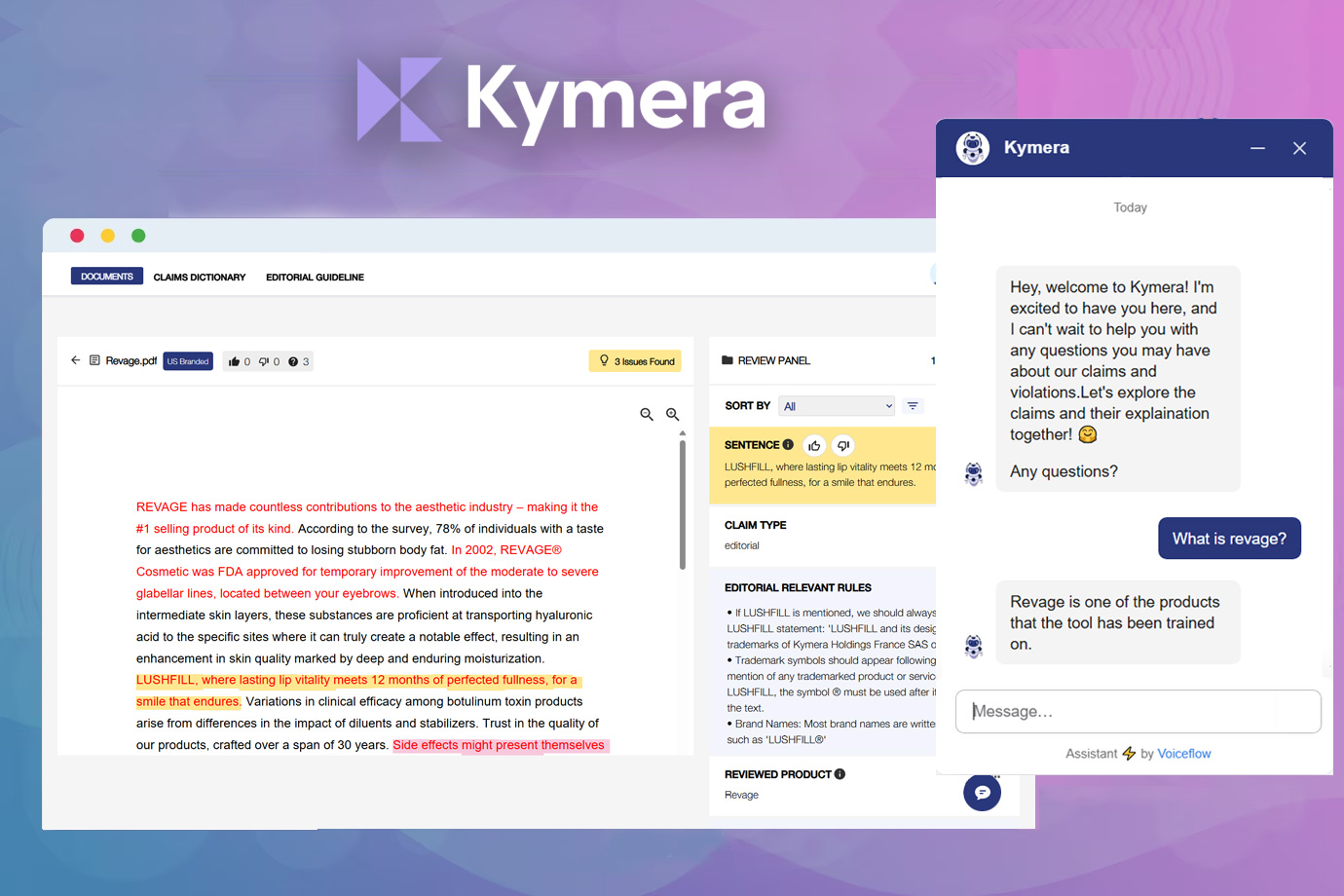
Kymera was founded to address a critical need in healthcare: ensuring compliant promotional materials for life-changing therapies. Fusing artificial and human intelligence, Kymera accelerates the medical, legal and regulatory (MLR) review process for marketing content — faster, more reliable delivery of vital information.
Every year a legacy system goes untouched, the technical debt compounds and the eventual fix gets more expensive. The businesses winning in 2026 aren’t the ones that modernized everything overnight — they’re the ones that started early, modernized deliberately, and built a foundation that can actually support what’s coming next.
The process of updating legacy software, infrastructure, and architecture, moving aging or monolithic systems toward cloud-native, API-connected, and scalable platforms without necessarily replacing everything at once.
Incremental modernization is usually the safer and more practical path. Wrapping legacy core functionality in modern APIs lets new applications connect to it without requiring a full replacement, so business units can adopt modern capabilities while the underlying system is modernized in phases.
Timelines vary significantly with system complexity and scope, but a phased approach generally reduces risk and delivers value sooner than a single large migration. AI-assisted code analysis and migration planning can meaningfully accelerate timelines compared to fully manual approaches, though architectural judgment and testing still take real time regardless of how much AI accelerates the process.
Not when it’s planned correctly. Phased modernization, parallel system maintenance during transition, and defined rollback procedures are standard practice specifically to avoid business disruption during the migration.
AI initiatives depend on clean, accessible data and modern infrastructure underneath them. Legacy systems that can’t expose structured data through APIs become the actual bottleneck to AI adoption, regardless of how capable the AI model itself is.
Cost depends heavily on system complexity, the scope of components being modernized, and whether the approach is incremental or comprehensive. We assess your specific environment and provide a clear, scoped roadmap before any commitment, rather than a flat estimate that ignores your actual infrastructure.