Kanban Style in ServiceNow: Viewing Work as It Really Moves
In the beginning, I didn’t notice this issue.
Everything in ServiceNow seemed okay. Dashboards had green colors. Reports did not shout. Tickets were progressing, in a sense. Still, it was as if the day was tiring in a manner difficult to understand. By the end of the day, it was as if more had been reached than was accomplished.
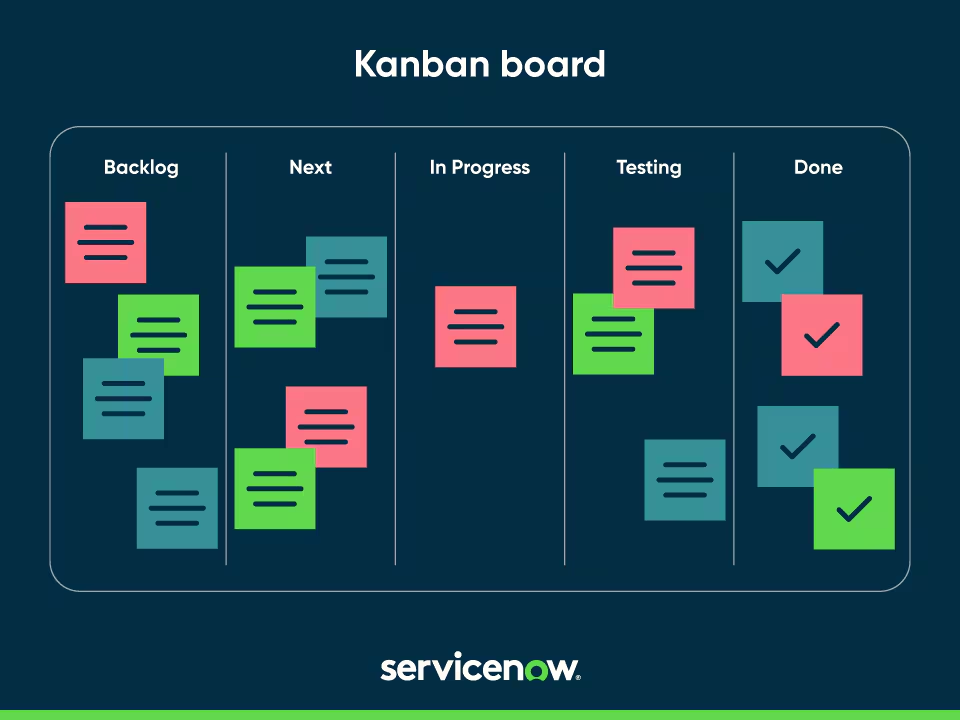
“If you have spent time inside ServiceNow, that feeling is most certainly familiar to you.”
Incidents don’t precisely end—they aren’t exactly stopped, either. Requests ping between states. A priority list changes mid-day, and when asked why, the explanation is cloudy. “Depending on things.” “Waiting.” “Review pending.”
“So, most of the time, the problem isn’t with the platform,” Anna Qu
It’s visibility.
It’s what Kanban does behind the scenes that matters.
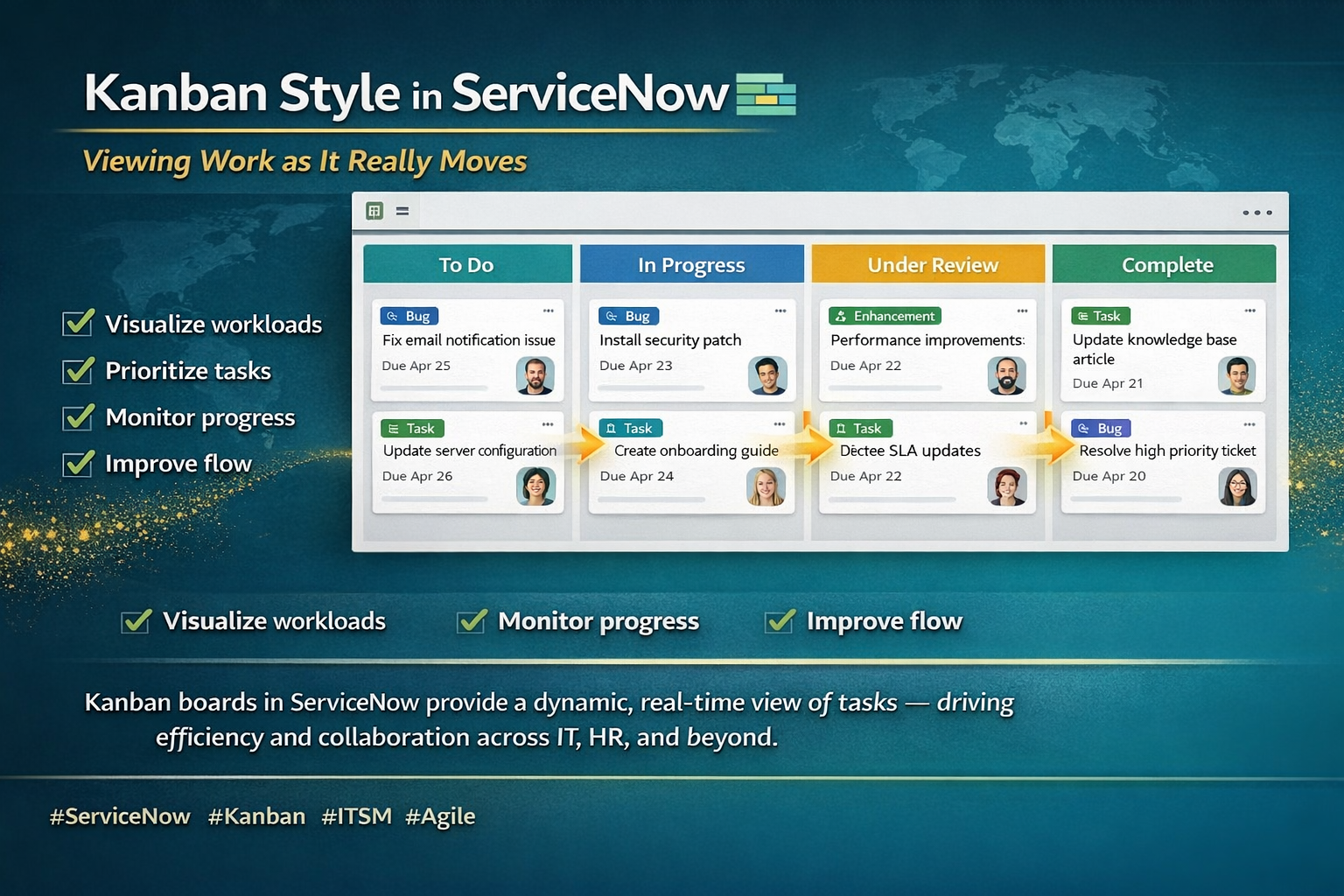
Not with rules. Not by imposing yet another procedure. But by presenting the work just as the work appears—a work in progress, clogged, stuck. Slightly awkward to the eye. Difficult to ignore.
Why Lists Feel So Helpful (Until They Don’t)
“Organ
Listing views is good. No one is disputing that.
But a list has its subtleties too.
They convey what is, not what is happening. You can organize by priority or organize by state, and motion becomes invisible. The delays are hidden. The overload blends in. All looks equally doable, even if it’s not.
Kanban does not facilitate this illusion.
Once the work is up on the board, things make themselves clear quickly. Some columns look congested. Some cards barely move. Some cards shoot up quickly. You do not need a report to explain it. It’s clear.
Then, when people see the image, the dialogue develops on its own.
Kanban Was Never About Speed
Lots of people think the Kanban approach is about speed.
It isn’t.
“In ServiceNow, work rarely grinds to a halt because individuals aren’t working hard enough,” explains Rodgers. “It comes to a halt because too many people are trying to accomplish too many things at the same time.”
Analysts are juggling multiple tickets, Rodgers says. And approvals are waiting without anyone taking action on them. Other tasks are assigned to people and then
In this respect, neither does Kanban blame somebody for this. It merely highlights the condition.
In other words, when a column is full of “In Progress” cards, a problem is no longer an abstract concept. It is right there. Moreover, when a problem is visible, a series of new, different questions come up.
Why is this step always full?
What are we waiting on here?
Are we beginning tasks quicker than we can complete them?
“Those kinds of questions don’t come out of the dashboard. They come from looking at the work, laid out before you, honestly,” said Ash
Why Kanban Feels Natural Inside ServiceNow
Kanban is good in ServiceNow, as it does not pretend to be something else.
The board rests right on real records: incidents, requests, HR cases, security tasks. There are no copies. No simulations. Whenever a card moves, a change is made in the record. Whenever a field changes, the board changes.
That makes a difference
What this means is that the board is not there to be pretty. It is not something that the team is supposed to keep maintained. People do what they were doing before. The result is seen through Kanban.
No extra work required. No extra upkeep.
What Visibility Does to Management Conversations
Something interesting happens when work is made visible.
So far, our
They no longer ask for updates all the time. Not because they care less, but because they don’t have to. They can see what’s in motion. They can see what’s stalled.
The dialogue changes.
Rather than
“Why isn’t this finished?”
It becomes
“What’s blocking this?”
That’s one shift with huge implications. Teams are trusted. Problems are shared. Progress isn’t personal anymore but for everyone.
The Part Everybody Pushes Back On
| Work-in-progress
In fact, almost every team will resist them at first.
It is particularly in environments such as Service Now that everything is urgent. There is a certain pressure to accept a piece of work as soon as it comes up. The word “not
Kanban is softly counteractive.
When a column reaches its limit, it does not reprimand anyone. A column simply displays reality: there is nothing left that can move on until what is on that page finishes.
First, it is limiting. Then it is a relief. The context switching decreases. The focus enhances. The work gets done. The stress decreases—under the radar, without anyone declaring it.
Why Kanban Beats Dashboards for Daily Work
“Dashboards are good at trend analysis and executive reviews.”
“kanban”: “A method of organizing work
An answer to practical questions is given instantly by a board:
What should I work on next?
“What’s stuck right now?”
What are the areas of need?
This is huge in daily scrums. The teams do not talk about their work. They see their work. Together. The talk remains earthed because the work is right there.
In addition, because the board is live, decisions are implemented immediately.
Kanban Isn’t Just for ITSM
Kanban applies perfectly outside incidents.
HR teams employ it to monitor cases for their employees. Customer support teams employ it to monitor escalations. The security teams employ it to graph investigations. The platform teams employ it to monitor backlog and tech debt.
The design remains simple. The worth increases.
Every team designs their board based on how they really function—and not based on some model of how they should function.
Ownership Without Chasing
Since cards are visible, one can expect the aspect of ownership to follow
When information is allowed to sit too long, the truth is that everyone can see it—not just the person who is supposed to see it.
People help because they can see the problem.
It’s pretty uncommon that kind of occurrence when there are lots of ticketed systems. Kanban systems make this the norm.
SMALL CHANGES, REAL IMPACT
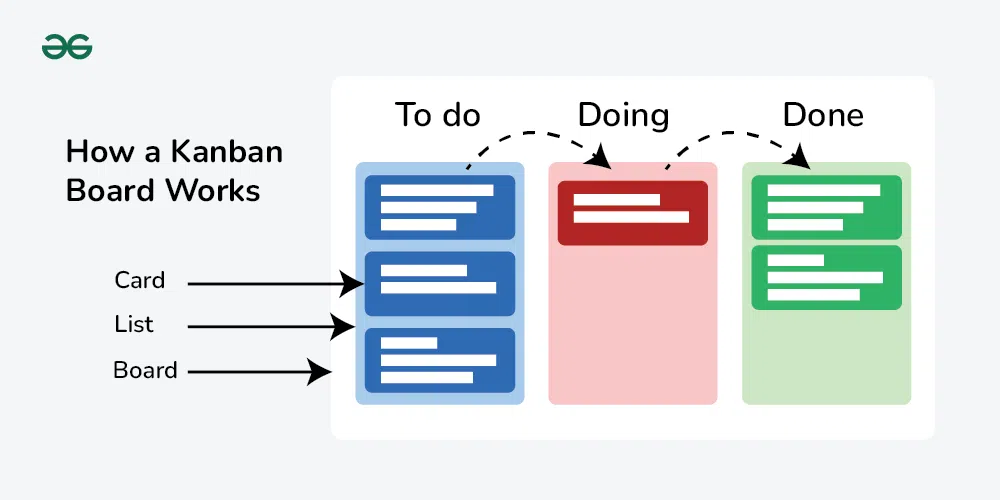
Kanban system doesn’t work by flipping a switch.
But gradually, things fall into place. Teams complete more tasks. Bottlenecks become dialogue, not irritants. The planning process gets better because flow can now be analyzed, not estimated.
Eventually, ServiceNow becomes less about an system for logging work and more about a system for directing it.
Conclusion
Conclusion What Kanban in ServiceNow isn’t about: trends and buzzwords. It is about honesty. It demonstrates work as it really happens. It reveals overload without pointing fingers. It urges people to focus without compelling them. And it creates space for teams in incredibly busy environments. When work stops languishing in a list and instead exists on a board, something shifts. Discussion becomes clearer. Decision-making improves. And eventually, work starts to flow rather than accumulate. In this sense, the actual benefit of Kanban in ServiceNow is not in its speed or metrics but in its clarity