From Reactive to Proactive: How ServiceNow GRC Transforms Enterprise Risk Management
In most organizations, risk is treated like a fire—only noticed when it burns something down. Spreadsheets pile up. Audit reports get ignored. Compliance is checked off like a chore. It’s a reactive cycle, not a strategic one. That’s where ServiceNow GRC steps in—not just as a tool, but as a transformation engine.
In this blog, we’ll explore how ServiceNow GRC shifts organizations from a reactive to a proactive risk posture, breaking silos and aligning risk with business goals—all in real-time.

What Is GRC in ServiceNow?
GRC stands for Governance, Risk, and Compliance, and in ServiceNow, it’s a unified suite of applications that helps you:
- Define policies and controls,
- Assess and monitor risks,
- Manage audits and issues,
- And ensure ongoing compliance.
But more than features, ServiceNow GRC offers something rare: visibility and accountability across the entire organization, not just in isolated departments.
Why Reactive Risk Management Fails
Let’s look at how risk is typically handled in many enterprises:
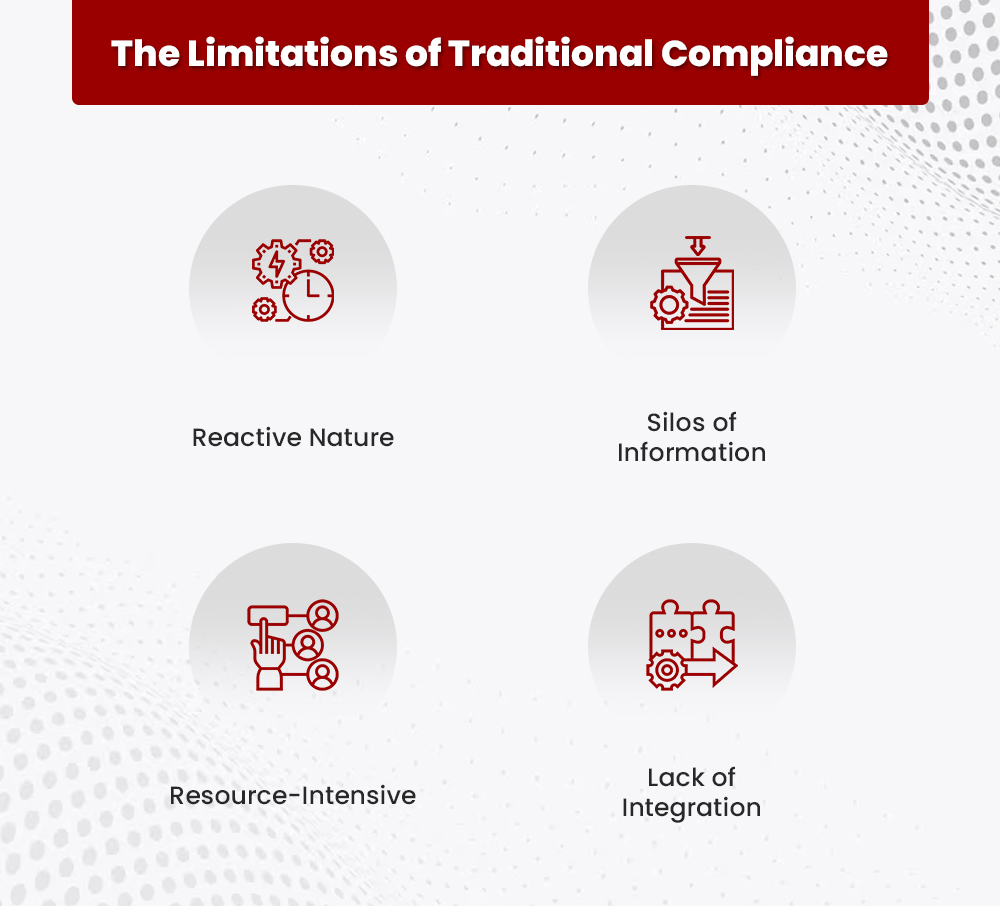
- Risk registers live in Excel files.
- Compliance audits are conducted annually, often in a hurried manner.
- Policies are emailed around and forgotten.
- When a violation happens, it’s already too late.
This is the check-box mentality—where compliance is the end goal, not business protection.
The problem? It’s slow, disjointed, and impossible to scale. Risks are identified only after they’ve caused damage. Teams don’t talk. Controls don’t evolve. A false sense of security is given to leadership.
Presenting ServiceNow GRC: From Fighting Fires to Preventing Them
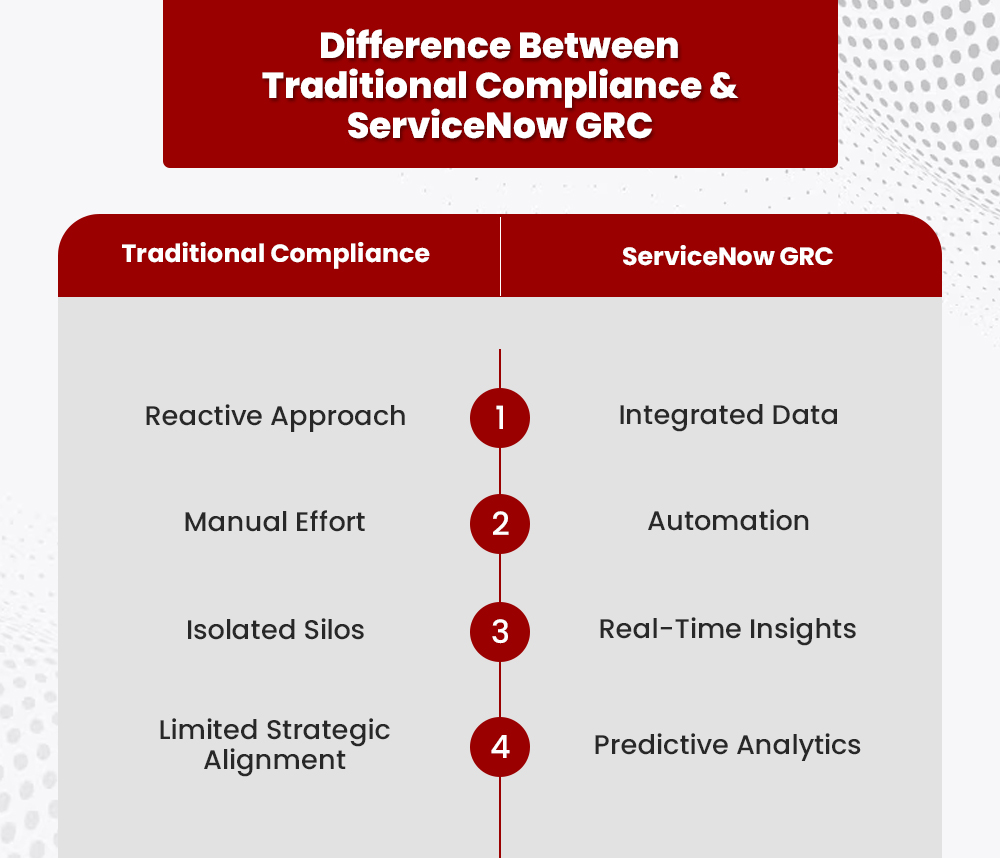
By integrating risk management into routine operations, ServiceNow GRC revolutionizes the conventional paradigm. Here’s how:
1. Centralized Management of Policies and Controls
The cornerstone of governance is policy. Policies and controls are stored in an organized, searchable repository in ServiceNow. Every policy can be linked to risks, controls, and laws.
This implies:
- No more redundant policies.
- Explicit accountability and ownership.
- Simple communication and updates.
To keep track of who read what and when, it also supports versioning and attestation.
2. Ongoing Risk Assessment
ServiceNow enables ongoing risk assessments in place of yearly ones. The dangers are:
- Type-specific tags (Operational, Strategic, Compliance, etc.)
- Associated with departments or business services
- scored according to probability and influence
Workflows can even be used to automate risk scoring and control testing. The system could immediately escalate the risk or initiate a mitigation plan if a critical control fails.
3. Real-Time Dashboards That Matter
Most compliance tools give you static reports. ServiceNow provides live dashboards that tell a story:
- What’s the current risk exposure?
- Which departments are failing controls?
- Are audit issues being resolved promptly?
Executives don’t need to wait for monthly reports—they can log in and see their risk posture right now.
And for auditors? Everything’s traceable. All actions, control tests, and updates are linked, logged, and prepared for reporting.
4. Workflows That Are Automated Save headaches and hours of time
Assigning duties, monitoring progress, and obtaining evidence are just a few of the many manual tasks that are part of GRC procedures. This pain goes away with ServiceNow.
For instance:
- The pertinent controls are automatically flagged when a new regulation is introduced.
- If a risk rating increases, the related party is notified.
- During audits, evidence collection can be automated via scheduled workflows.
No more chasing people via email. Everything’s in one platform, flowing from step to step, owner to owner.
5. Making Risk-Informed Choices at All Levels
Aligning risk with business impact is one of the most difficult GRC problems. This is resolved by ServiceNow by linking risks to:
- Services for businesses
- Places
- Strategic goals
Leaders can make better decisions because of this context. For instance:
Should change approvals be affected if a control failure occurs in a high-priority service?
Should we restrict data sharing with a vendor if their risk score declines?
These are strategic decisions rather than technical ones, and ServiceNow makes them apparent.
Example from the Real World: From Audit Chaos to Control Clarity
Suppose you are employed by a financial company and are subject to a data privacy compliance audit every three months. Prior to ServiceNow, this included:
- Hurrying to get access logs and screenshots
- sending 15 individuals an email for proof
- completing dozens of Excel forms
Right now? With ServiceNow GRC:
- Controls are already mapped to the requirement (e.g., GDPR Article 32)
- Automated control tests run weekly
- Results are stored as audit artifacts
- Auditors can access a real-time report with drilldowns
Instead of audit being a disruption, it becomes a byproduct of good governance.
Fast Gains with ServiceNow GRC
The GRC suite does not need to be implemented all at once. This is a clever phased strategy:
| Stage | Area of Focus | Effects |
| 1 | Management of Policies and Controls | Clear ownership and structure |
| 2 | Controlling Risk | Real-time risk visibility |
| 3 | Management of Audits | Quicker and more seamless audits |
| 4 | Constant Observation | Early warning, quicker action |
| 5 | More Complex Integrations | Data in real time from various tools |
Without overburdening your team, each step increases visibility, automation, and control.
GRC Is Not Limited to Regulated Sectors
You may believe that GRC is exclusive to the banking and healthcare industries. Every organization faces a variety of risks, such as operational, reputational, vendor, and cyber risks.
Regardless of your size—Startup or Fortune 500—if you:
- Manage client information,
- Depend on outside parties,
- Provide services using technology,
… Then you need risk management and governance. ServiceNow makes it scalable, traceable, and modern.
Final Thoughts: Don’t Just Manage Risk—Lead with It
Most companies treat risk as a back-office function. The smart ones use it as a strategic lens. You can lead with integrity, make wise decisions, and protect what matters with the help of ServiceNow GRC’s compliance management tools.
Risk doesn’t wait in the modern world. Neither should your tools.