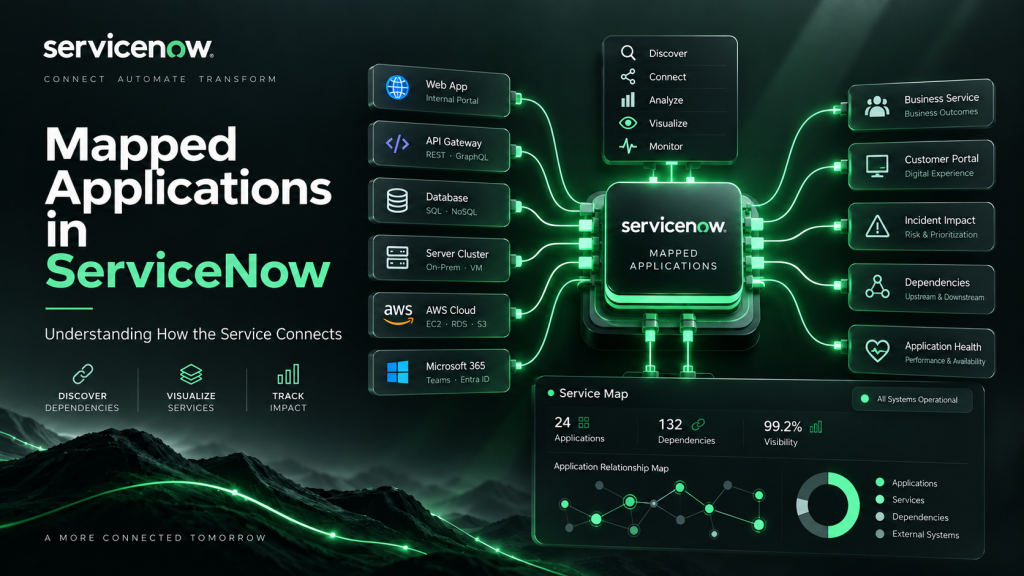
Mapped Applications in ServiceNow – Understanding How the Service Connects with Real Infrastructure
The first time a person works with ServiceNow, they tend to focus on the things they can easily interact with or see. These include:
- incidents
- change requests
- service catalogs
- workflows
These are the main applications of ServiceNow because they represent the operations of IT departments in an organization. However, beneath these operations lies a whole new concept that helps connect them within an organization. This concept refers to the relationship between business services and infrastructure. At this point, the term “mapped application” becomes essential.
The role of mapped applications in an organization cannot be overstated because it helps in understanding how business services work in an organization. If an organization does not map applications in ServiceNow, it can easily find itself in a situation where no one understands what works with what in the organization. If something goes wrong in the organization, it becomes hard to understand what the problem is because no one understands the applications of ServiceNow in the organization.
In ServiceNow, a mapped application gives a clear understanding of the relationship between software services, servers, databases, and other components. It eliminates the need to guess the relationship between these applications.
What Is a Mapped Application?
A mapped application in ServiceNow means an application service in which the infrastructure components of the application have been identified and connected in the configuration management database. It means the platform knows exactly what infrastructure components support an application.
For example, a business application might be an online customer portal. It appears as an application service from the user’s point of view. However, in reality, it might be supported by various components:
- Web servers
- Application servers
- Databases
- Load balancers
- Network devices
- External APIs
A mapped application service would connect these components.
These components might become incredibly useful in case of an incident or in assessing the impact of a change.
Why Application Mapping Matters
Most companies have dozens, if not hundreds, of applications running in their IT environments. Over time, these applications interconnect in ways that may not be immediately apparent. When documentation is lacking, it becomes difficult to understand the impact a failure in one application might have on another.
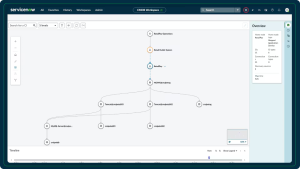
Application mapping helps alleviate these issues by creating a reliable model of these interdependencies.
The following are a few reasons why application mapping is so beneficial.
Better Incident Investigation
When a failure occurs, the first question on everybody’s mind is, “What is really affected?”
If the application is properly mapped, ServiceNow is able to show the infrastructure components behind a specific application. This makes it much simpler to understand where the failure is occurring.
For example, if a database server fails, ServiceNow is immediately able to show the applications affected by the failure. This allows teams to focus on the areas where the failure is having the greatest impact.
Clear Impact Analysis for Changes
Change management becomes safer if applications are mapped. Teams will be able to analyze the impact of the change if something goes wrong. For example, if the server maintenance window impacts many critical applications, the change advisory board will be able to plan accordingly.
Improved Service Visibility
ServiceNow closes the gap between business services and technology infrastructure. Business leaders generally view the world as applications rather than servers. Therefore, the company will be able to explain the system dependencies in a way that non-technical people will understand.
Stronger Operational Awareness
The operations team will be able to better understand how the systems work together if the services are mapped correctly. This will allow them to troubleshoot more quickly and prevent small problems from becoming big ones.
How ServiceNow Maps Applications
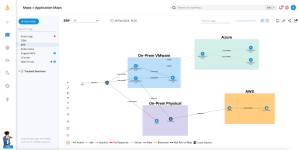
ServiceNow maps applications using its discovery tools and the relationships between the discovered data within the CMDB. The purpose of the mapping is to locate every component that contributes to the service’s functionality.
There are two main ways that the mapping takes place.
Automatic Discovery
ServiceNow Discovery scans the network and identifies infrastructure items such as:
- servers
- virtual machines
- databases
Once the infrastructure items have been discovered, the system begins to create relationships between them.
Service Mapping takes it a step further by identifying how the application interacts with the discovered infrastructure. By analyzing the network traffic and system behavior, the platform identifies which infrastructure items support the service.
Manual Mapping
At times, teams may be required to manually establish relationships within the CMDB. This could be due to some dependencies being difficult to identify or additional business information being required.
Manual mapping must be carried out with great attention to ensure that the relationships are accurate over time.
The Role of the CMDB in Application Mapping
The CMDB is basically the core of the entire mapping process. This is because all servers, databases, applications, and network devices are essentially stored within the CMDB. The relationships between these items essentially illustrate how services operate.
Without an accurate CMDB, application mapping becomes irrelevant. This is why organizations looking to invest in service mapping should consider investing in an accurate CMDB first.
Having accurate configuration information ensures that the generated application map is accurate.
A Practical Example
Consider a company that offers an online payment system. The users of the system can access it through a web interface. However, there are several layers of infrastructure that are necessary for the system.
The system may be using:
- Web servers that manage incoming requests
- Application servers that manage payment processes
- Database systems that store information related to transactions
- Authentication systems that verify user information
- Network systems that facilitate communication between systems
In case a database server is having performance problems, the application mapping feature will show how it is related to the payment system. Instead of analyzing each system, engineers will be able to see the relationship.
Challenges in Application Mapping
Although application mapping is very beneficial, it is associated with several challenges. Some of the challenges associated with application mapping include:
- Inaccurate data collected during the mapping process
- Frequent changes in the infrastructure of the system
- The use of hybrid systems that incorporate both cloud and on-premises technology
- Presence of hidden dependencies in the application systems
The Benefits of Mapped Applications on IT Operations
Once the application mapping is fully implemented, the benefits are apparent in several areas of IT operations. These include:
- Efficient handling of incidents
- Better problem management
- Improved change management
- Better understanding by the service owners of how the applications function
In essence, the application mapping changes the way teams think about their IT operations.
Final Thoughts
Mapped applications on the ServiceNow platform are not just a way to visually present IT applications. It is a way to gain a deeper understanding of the dependencies that exist between digital services and the IT infrastructure. It helps the organization move from a reactive approach to a proactive approach in managing the services.
For many organizations, the need for application mapping is critical because of the complexity of the IT operations. For instance, when applications are mapped on the platform, teams no longer need to guess how the applications are interacting. Instead, they have a clear view of:
- the services they are delivering
- the IT infrastructure supporting the services
- the dependencies that exist.