Artificial Intelligence-Powered Virtual Agents for ServiceNow: A Useful Partner or Just Another Chatbot?
AI-Based Virtual Agents in ServiceNow come with lofty claims. Resolution happens faster. The number of tickets goes down. Support is always at your disposal. And on paper, all that looks quite good.
However, the story that really matters about Virtual Agents is not about artificial intelligence at all. Rather, it is about people – perplexed users, overwhelmed service desks, and organizations wanting to accomplish more with less.
Virtual Agents are not magic. Virtual Agents are tools. And like every other tool in ServiceNow, their success will depend solely on the care with which they are designed and used.
Why Virtual Agents Exist in the First Place

Before Virtual Agents, the user was left with two alternatives whenever things went wrong:
- Log a ticket and wait
- “Call the service desk and hope that someone answered the phone.”
These sentiments were echoed.
Neither situation was satisfactory. Simple queries are backloaded. Password resets burdened busy analysts. Users were ignored. Analysts were overwhelmed.
Virtual Agents were born out of the need to fill the gap between ‘I have a question’ and ‘I need a human right now.’
They’re intended to deal with the repetitive, predictable, low-risk interactions – it’s about protecting the people from burnout rather than substituting them.
Virtual Agents Are Conversations, Not Scripts
Overall, this
One of the most common fallacies regarding Virtual Agents is considering them as decision trees.
Good Virtual Agents are more like assisted conversations.
A well-designed Virtual Agent would be able to:
- Does so in a straightforward manner
- Adjusts according to user response
- Knows when to Stop and Escalate
- Prevents overwhelming the user with choices
In short, a poorly constructed one will operate in reverse – forcing the visitor down stiff paths and asking questions in advance, thinking it knows the best answer.
Users can forgive limitations. But they do not forgive arrogance.
AI Isn’t Synonymous with “Understanding Everything.”
The power of the ServiceNow artificial intelligence engine, or Natural Language Understanding (NLU), is substantial but certainly not telepathic.
The Virtual Agent does not “understand” users as a human would. It understands their intent through patterns and confidence levels.
This means:
- Simple speech is more effective than clever speech
- Training data trumps features
- Small changes start to accumulate, Morris
“The organizations that quickly put the implementation into action without putting investments into intent-based training tend to point the finger at the tool. In reality, they have just skipped the thinking part of the process.”
Where Virtual Agents Are Effective
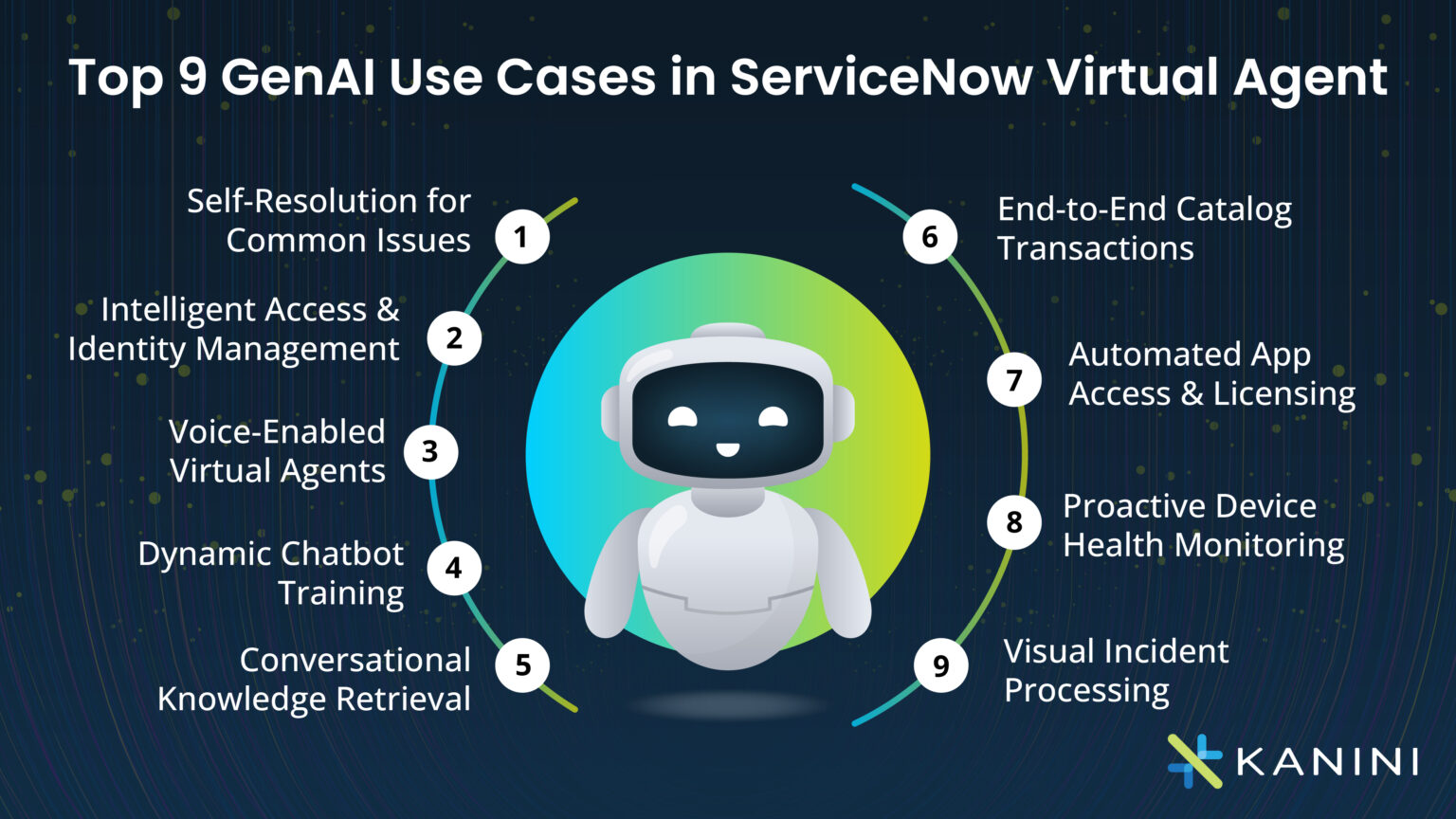
Virtual agents work in various areas.
Virtual Agents have the advantage in cases where speed is more valued than complexity.
For example:
- Password Resets
- Account unlocks
- Requests for access to the VPN
- Software installation requests
- Checking ticket statuses
- Basic HR policy queries
These interactions are formal, repetitive, and lacking emotion. These are ideal for automation.
Attempting to use the Virtual Agent on complex topics or emotionally driven discussions is generally not effective.
The Handoff to Humans Matters More Than AI
The good Virtual Agent recognizes when it ceases to be beneficial.
It is when a user begins to repeat themselves, complain, and ask for clarifications outside of the interaction flow that you need to escalate.
Escalation should not be the result of failure.
When done properly:
- Context is passed to the agent
- The user does not repeat information
- The transition seems deliberate
“Nothing destroys trust faster than automation that refuses to let go.”
Virtual Agents Reveal Flaws in Processes
Here’s the uncomfortable truth:
They typically point out problems that exist.
- The Virtual Agent will have difficulty if your approval process is confusing
- If your knowledge articles are out of date, they will still be displayed by the Virtual Agent
- If you have poorly designed items in your catalog, no amount of automation is going to help you
Virtual Agents aren’t hiding bad processes; they are emphasizing them. That’s not a weakness. That’s feedback.
Technical vs. Cultural Change
Enabling a Virtual Agent technically is quite simple.
The problem of winning the confidence of the people is more challenging.
They will:
- Test it
- Ask strange questions
- Attempt to break it
That’s normal.
Adoption is enhanced by:
- The tone has a humanity to it
- The answers are quite helpful
- The bot knows when it doesn’t know
- The success stories are silently reinforced
Coercion will not work. Indication must.
Virtual Agents and the Fear of Reducing Headcount
Such fear is a normal phenomenon common to all institutions.
Virtual Agents rarely fire people. They transform roles.
- Service desk staff spend less time on password resets
- Analysts focus on real problems instead of routines
- Teams gain breathing room
“Automation does not replace expertise; it safeguards it.”
Design Decisions Matter More Than AI Features
The most effective Virtual Agents will always possess:
- Easy words
- Limited options
- Well-defined boundaries
They’re not trying to be clever.
They are trying to be useful.
Over-engineering is the quickest way to kill adoption.
Virtual Agents Are a journey, not a Launch
The most common mistake is treating Virtual Agents as a project.
They are not.
They require:
- Continuous intent refinement
- Feedback analysis
- Conversation tuning
- Regular content review
The Virtual Agent that you release into the world should not be the one that you end up keeping.
Conclusion: A Quiet Shift in the Ways of Work
AI-Powered Virtual Agents in ServiceNow are not so exciting. They may not impress the corporate executive during a demo. They won’t fix all issues.
What they do – when done well – is remove friction.
- They reduce waiting times
- They filter noise
- They provide people with answers when they are needed
Over time, expectations change:
- Assistance becomes quicker
- Processes become clearer
- Human efforts become more meaningful
That’s not artificial intelligence.
That’s a good design.
And in the world of ServiceNow, good design always triumphs.