What does a ServiceNow Support Specialist actually do?
Essentially, a Support Specialist maintains the uptime, usability, and reliability of the ServiceNow platform. They are the first line of defense for any problem, acting almost like a mediator between the end-user, the developer, and the administrator.
Typical daily functions for a Support Specialist include:
- Examining incidents involving ServiceNow functionality
- Resolving problems with logging in or gaining access
- Resolving form, workflow, or notification issues
- Role handling and user request management (permissions and access requests)
- Monitoring platform health and performance
- Supporting integrations and data issues
- Escalating complex problems to developers when required
This is what makes the role so unique. It involves not only technical knowledge, but also people knowledge. You’re not only resolving the issue; you’re improving the lives of actual people.
Why the role sometimes goes underappreciated
People often overlook support personnel, assuming it is a simple task of handling tickets with some troubleshooting. A Support Specialist with the right knowledge of ServiceNow is far more than this. They understand:
- Module interconnections
- Production workflow behavior
- ACL impact on access rules
- How small config changes create big effects
Unlike developers who focus on building new functionality, Support Specialists work with running environments. The effects of every change, fix, or workaround are truly apparent — a single incorrect step can impact thousands of people. This role carries huge responsibility that makes it more significant than it seems.
Challenges faced daily
Every day for a Support Specialist is different. Common challenges include:
- People unable to access the system because of role or authentication issues
- Workflows failing silently in the background
- Notifications not working as expected
- Incorrect data in reports
- Conflicts between customizations and platform upgrades
It is not only about solving the problem; it is also about discovering the source without further disturbing the system.
Core skills required
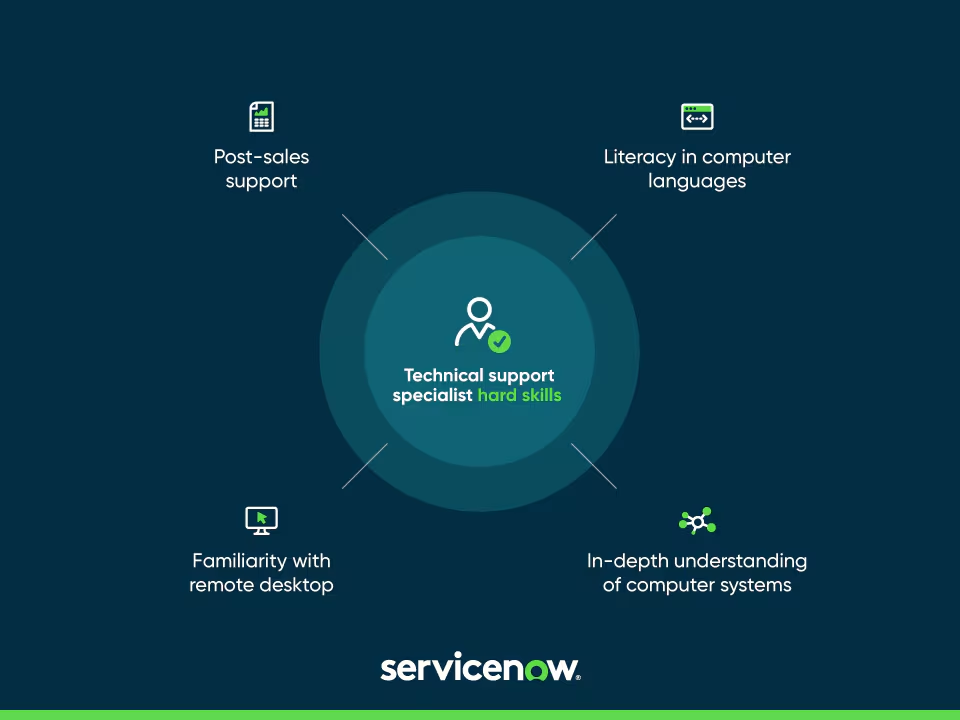
Technical skills
- Good understanding of core ServiceNow modules
- Awareness of incidents, problems, changes, and requests
- Experience with ACLs, roles, and user administration
- Ability to read logs and debug workflows
- Scripting basics: JavaScript, GlideRecord
- Knowledge of integration and data import basics
Non-technical skills
- Clear communication with users and stakeholders
- Patience with recurring or urgent matters
- Documentation skills
- Task prioritization
- Calm decision-making
A Support Specialist can break down technical explanations into simple language — a skill many people do not fully appreciate.
How Support Specialists collaborate with other departments
- End users — solving everyday problems and answering queries
- Developers — escalated bugs and customization problems
- Admins — coordination of access, updates, and setups
- IT leadership — providing insight into recurring problems
Career path
One of the greatest positives about this role is career flexibility. Support Specialists learn many different parts of the platform, which opens several paths:
- ServiceNow Administrator
- ServiceNow Developer
- Business Analyst
- Platform Owner
- Technical Consultant
Final thoughts
The ServiceNow Support Specialist may not be the star of the show, but the platform truly relies on this role: keeping systems stable, users productive, and operations running smoothly. While developers build and architects design, it falls to Support Specialists to ensure everything actually works, day after day. For anyone wanting a strong, long-term career in ServiceNow, this isn’t a step back — it’s often the smartest step forward.