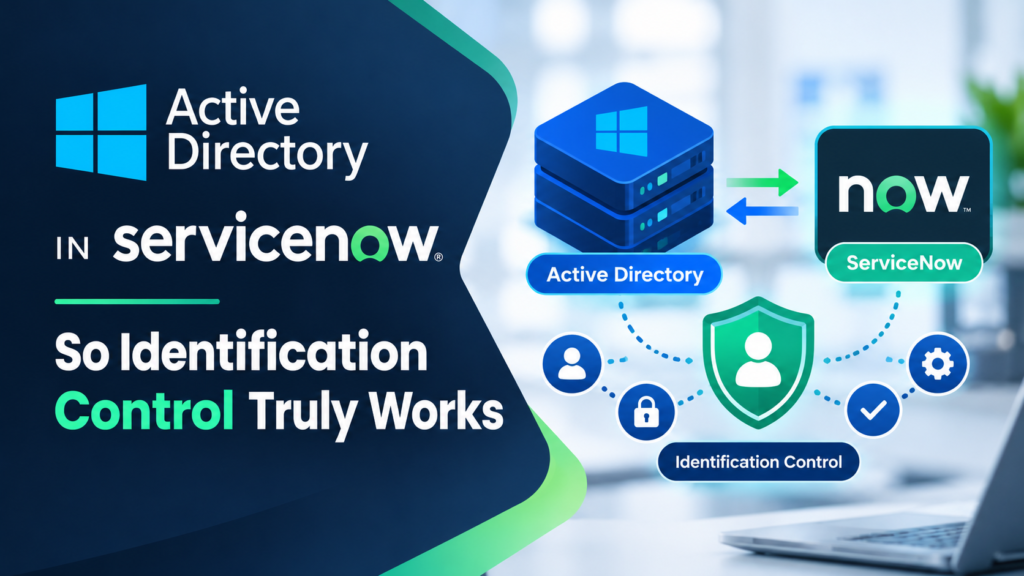
Active Directory in ServiceNow: So Identification Control Truly Works
You realize the vintage announcing: “You can’t make this stuff up.” I imply, in case you’ve ever been inside the trenches of IT operations, you already know the fact. Identity statistics is the whole lot.
- customers
- corporations
- computers
- service money owed
They’re the spine of the entirety we do. For most organizations, the backbone is Microsoft Active Directory. However, here’s the factor: matters get definitely interesting whilst Active Directory and ServiceNow play collectively.
permit’s talk about this in a manner that’s relevant to human beings who have absolutely accomplished this. So, why is the Active Directory essential in ServiceNow?
ServiceNow is a person-centric platform. Everything we do in ServiceNow –
- incidents
- requests
- approvals
- obligations
– is associated with a person. however what if we needed to do all of this manually? It might be a nightmare. Users might be inconsistent and unmanaged.
That’s in which active directory is available.
Instead of seeking to manually create and manage customers in ServiceNow, agencies can actually combine ServiceNow with Microsoft Dynamics CRM. This integration lets in-person records and organizational shape to absolutely circulate ServiceNow.
however right here’s the aspect: the real electricity of integrating ServiceNow and LiveCycle is not the automation. It’s the consistency.
When HR modifies the branch of a person in the Active Directory , the same facts appear in ServiceNow. When a user is brought to a new protection group, their workflows can be traded. This is a form of alignment between identification and method.
How the Combination Virtually Works
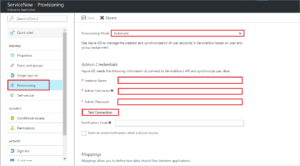
Whilst integrating Active Directory and ServiceNow, the system is accomplished via LDAP (Lightweight Directory Access Protocol). ServiceNow securely connects to the directory and imports facts through scheduled imports.
You may configure:
- LDAP servers
- Organizational gadgets (OUs) to import from
- person and group mappings
- Scheduled imports
- transform maps to map advert to ServiceNow
for instance:
- sAMAccountName -> user_name
- mail -> email
- department -> branch
- supervisor -> supervisor
- and so forth
Once configured successfully, ServiceNow can periodically import information from lively listing and update records routinely.
It sounds simple. But the shape is very vital. Wrong choices made at some stage in the system can confuse.
Consumer Synchronization: More Than Simply Names and Emails
a lot of those who are new to ad integration count on it’s all about synchronizing user statistics. But there’s lots extra to it.
Whilst ad integration is accomplished properly, it can facilitate:
- automatic onboarding
- automatic offboarding
- role project
- organization-primarily based approvals
- Get admission to request methods
Let’s say we have a brand new lease who joins the Finance department. HR adds their account to the Active Directory and adds them to the “Finance customers” security group. This safety organization is mapped to roles in ServiceNow.
So, with no guide intervention on the ServiceNow end:
- A consumer account is created
- Their branch is ready
- Their manager is connected
- Their access roles can be mechanically granted
That’s when integration genuinely becomes thrilling.
Organization Synchronization and Get Entry to Manipulate
Organizations in Active Directory are massive.
Businesses in ad often manage:
- record share permissions
- software get admission to
- VPN permissions
- email distribution lists
While the ones advert agencies synchronize into ServiceNow, they can be utilized for:
- venture corporations
- Approval companies
- Get the right of entry to request achievement
- Reporting
For instance, if the ‘IT aid’ organization is present in the advert and is synchronized into ServiceNow, it could be applied as a challenge institution for incidents. This means if a user is introduced to the ‘IT aid’ institution in an ad, they will be routinely introduced to the mission institution in ServiceNow.
No duplication. No guide intervention.
But, it’s far more crucial to ensure the mapping is finished successfully; in any other case, you’ll grow to be with duplicate or incorrectly mapped groups.
Handling Organizational Modifications
one in all the biggest benefits of integrating an Active Directory with ServiceNow is the handling of organizational modifications.
Organizations are constantly converting:
- people exchange departments
- Managers exchange
- Organizational structures exchange
If no longer well included, every alternate needs to be meditated in ServiceNow. This could be risky.
With proper advert sync:
- Departmental modifications are contemplated routinely
- Managerial modifications are reflected robotically
- A disabled person’s debts can be deactivated automatically
This is vital for compliance and security.
If a worker leaves the enterprise, the account can be disabled automatically. This ensures that the ServiceNow account for the employee isn’t always live.
Not Unusual Demanding Situations in Real Implementations
permit’s face truth. Integrating ServiceNow with Active Directory won’t usually be best the first time.
Some commonplace problems that might arise consist of:
- Replica users
- This normally takes place whilst e-mail addresses and usernames aren’t the same
- Wrong manager Mappings
- Whilst the supervisor characteristic is not effectively mapped, the complete approval procedure can go awry
- Overloaded organization Imports
- While all of the organizations from the Active Directory are imported, ServiceNow can end up cluttered. It’s best to import only the required organizations
- Safety Misconfigurations
- Whilst connecting to the LDAP server, the security configuration has to be properly set
The trick is to design before you build. understand what records you actually need within ServiceNow.
Protection Issues
Lively listing integration is a sensitive information integration. Safety should be taken seriously. Security satisfactory practices are:
- The usage of at ease LDAPs
- The import scope must be limited to the necessary Active Directory Organizational gadgets
- Guard integration bills
- defend position assignments, often reviewing audits
You don’t want ServiceNow to become a protection risk because of careless role-to-position integration. Integration should ease governance, not reduce it.
ServiceNow Roles and Advert Businesses
A key integration attention is whether or not to manage roles internal of ServiceNow or to integrate them with Active Directory companies. Many agencies choose to combine Active Directory organizations with ServiceNow roles. This is a great preference due to the fact:
- access, manipulate, remains centralized inner Active Directory
- ServiceNow is merely a consumption device
This desire minimizes management and is more aligned with corporate security fashions.
The tradeoff is that this preference ought to be documented. Without documentation, troubleshooting access to issues is hard.
For example, if a person complains, “I don’t have access to,” we want to determine:
- if the person is in the perfect active directory organization
- if the active directory organization was imported successfully
- if the active directory institution is mapped to the correct position
This chain of occasions has to be clean.

Why This Integration Is Strategic
This integration with the Active Directory is some distance more than just a technical workout. It’s an enabler of different strategic initiatives within the IT enterprise.
a number of those advantages consist of:
- Operational efficiency
- statistics integrity
- Compliance readiness
- get the right of entry to control
- Workflow automation
In a mature surroundings, ServiceNow becomes procedure-pushed, and Active Directory remains identification-pushed. This results in a synchronized surroundings.
This synchronization of structures reduces human mistakes to a minimum.
Final
This integration with Active Directory in ServiceNow may additionally seem like a trivial exercise within the background of IT operations. But this integration determines:
- the quality of user statistics
- the efficiency of approval processes
- the quality of access management within a business enterprise
What sets a basic integration with Active Directory apart from an amazing one is planning. This planning entails:
- knowledge relationships between records
- developing role hierarchies
- the usage of filters to import statistics
- making plans that preserve satisfactory security practices
If completed nicely, this integration between Lively Listing and ServiceNow transcends separate structures. Instead, it becomes one device working in harmony with itself — identification-pushed and system-driven, respectively.
This is what the IT landscape of today needs.