ServiceNow’s Part in Creating Department-Wide Employee Experience Centers
In the digital workplaces of today, the employee experience is determined by more than the length of time it takes to close an IT ticket or the ease of onboarding. From the first day of work to their interactions with HR, IT, finance, and facilities, it covers the entirety of an employee’s career.
But there’s a big problem.
Most companies have siloed systems — one portal for submitting HR requests, another for submitting IT requests, and another for submitting approvals or travel claims. Employees often waste time figuring out where to go for what. Delays, frustration, and decreased productivity were the results.
Along with being an IT platform, ServiceNow is bridging this chasm by acting as a single experience engine that gathers all the departments under one digital umbrella.
The Shift: From ITSM Tool to Experience Platform
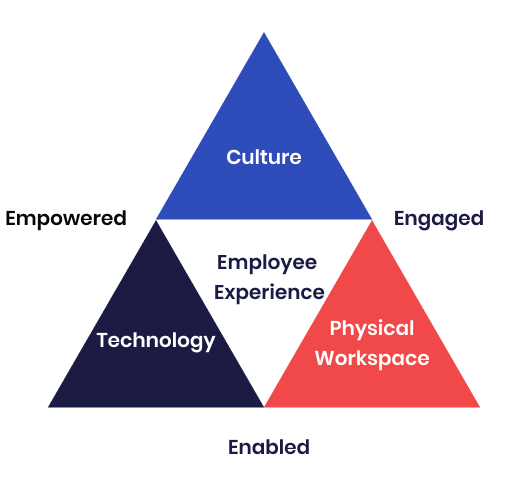
ServiceNow started out as an ITSM (IT Service Management) platform. It has expanded over time into a major player in enterprise workloads, supporting processes within facilities, finance, procurement, human resources, and even legal functions.
But the actual change occurred when organizations understood something profound —
“The employee doesn’t care which department resolves their issue; they just want it fixed quickly.”
This change in philosophy resulted in the formation of the Employee Experience Hub, a single gateway through which employees can view all the information they require, irrespective of the department that created it.
What is a Unified Employee Experience Hub?
Treat it like an employee’s “one-stop digital front door.”
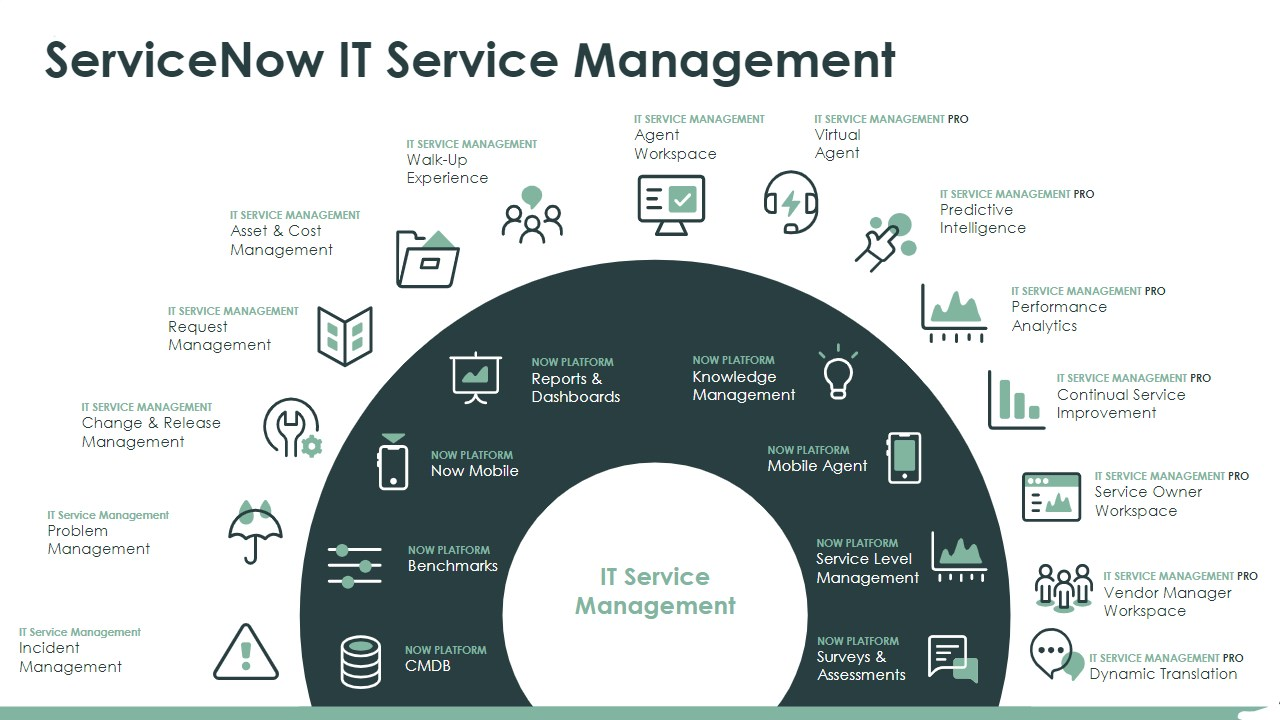
Several departments’ demands, data, and services are brought together into one streamlined, contemporary interface that can be reached via desktop, mobile, or chat.
There is no necessity to flip between the HR Service Delivery (HRSD), ITSM, and Facilities modules since an employee can accomplish all that via a single, user-friendly portal, such as requesting a new laptop, viewing leave policies, and requesting a letter of salary.
In the background, ServiceNow’s Now Platform automatically sends every request to the corresponding department to guarantee speed, transparency, and a standardized experience.
The Importance of Integration Across Departments
The modern workplace is interconnected. For example, hiring a new employee entails more than just following HR protocol —
- HR initiates the onboarding process.
- IT provides access to hardware.
- Facilities prepare the workspace, and
- Finance organizes payroll and manages employee benefits.
When these departments utilize different tools, the process gets lengthy, cyclical, and error prone.
ServiceNow corrects this by serving as the company’s central nervous system. It’s Now Platform links these departments through automated workflows, shared information, and one user experience layer.
The result? Smooth, end-to-end process that is organic to the employee despite several departments laboring in the background.
Critical Building Blocks of Unified Experience Hubs
- Center Pro for Workers
The innovative gateway to all employee services. It employs search, recommendation based on artificial intelligence, and tailored widgets to provide employees with all the data they require in a single interface. IT or not, it feels branded and unified with HR or support FAQs.
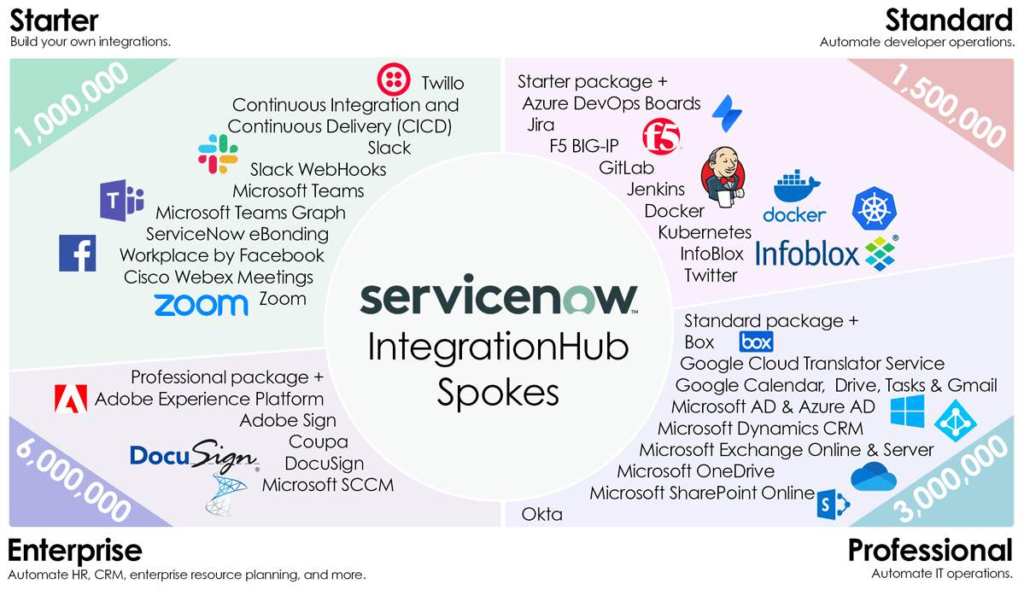
- Center for Integration
By connecting external tools like Workday, Microsoft Teams, SAP, or Salesforce, it allows ServiceNow to coordinate actions across multiple systems without requiring human intervention.
- Flow Designer and Process Automation
These no-code tools allow departments to design complex cross-departmental workflows that initiate automatically when certain conditions are satisfied, such as device refreshes, policy changes, or onboarding.
- AI and Virtual Agents
ServiceNow’s AI engine uses natural language processing (NLP) to understand queries. Employees can simply chat with the virtual agent in Teams or Slack to get prompt support, regardless of whether the response comes from HR, IT, or Finance.
- Administration of Integrated Knowledge
Rather than having FAQs stored in independent silos, ServiceNow brings data from all departments together. One robust search bar gives you the correct response whether you’re attempting to reset your password or understand medical benefits.
The Impact on People: Beyond Technology
Great experiences are not built by design thinking and empathy alone, but by them too.
Human-centered design is at the heart of ServiceNow’s philosophy, ensuring that all touchpoints are intuitive and significant. When they receive timely responses, smooth approvals, and personalized interactions, employees feel valued, empowered, and a part of the organization.
Additionally, a single experience hub strengthens organizational culture. Employees see departments collaborating rather than operating independently. Request flow, bottlenecks, and areas for additional employee experience enhancement are all visible in real time leadership.
The “Day in the Life” is a real-world example
Think about Sarah, a new employee at a global company that uses ServiceNow.
- On her first day, she logs into the Employee Experience Portal.
- She is given instant access to HR policies, a personalized welcome message, and an onboarding task checklist.
- Her laptop order, access requests, and workspace setup have already begun as part of the onboarding process.
- She then asks about the benefits of utilizing the Virtual Agent in Teams. The bot pulls information from HRSD and responds instantly.
- A few weeks later, she raises an IT ticket — again through the same portal. There is no need to figure out where to go.
To Sarah, this isn’t IT, HR, or Facilities. Her company is the only one that is responsive and seamlessly connected.
That is the power of a ServiceNow-powered cross-departmental experience hub.
Measurable Business Results
Businesses using this unified model report notable gains:
- Request resolution can be accelerated by up to 40%
- Increased scores for employee satisfaction (ESAT)
- Less manual labor for IT and HR
- Improved process visibility and compliance
The greatest benefit, however, goes beyond the numbers: employees feel that their company values their time, listens to them, and responds.
Discover the Innovative Companies of the Future
In 2025 and beyond, the employer brand’s reputation will be based on employee experience. Workers demand the same seamless, mobile, and tailored work experience they get as customers.
ServiceNow is emerging as the experience foundation of contemporary enterprises, building not only effective but also enjoyable working spaces with the help of AI, automation, and interdepartmental processes.
“How do we manage services?” That is no longer the priority. “How do we create experiences that get people to love what they do here?”
To sum up
In a world of mass digital transformation, the competitive edge of a company lies in how it manages its people ServiceNow’s integrated Employee Experience Hub integrates HR, IT, Facilities, and Finance into one cohesive, interlinked ecosystem, driving greater employee satisfaction, simplifying work, and freeing staff to do what matters most: innovation and growth.
As part of transforming processes, early adopters of the change are creating a culture of collaboration, openness, and purposeful work.