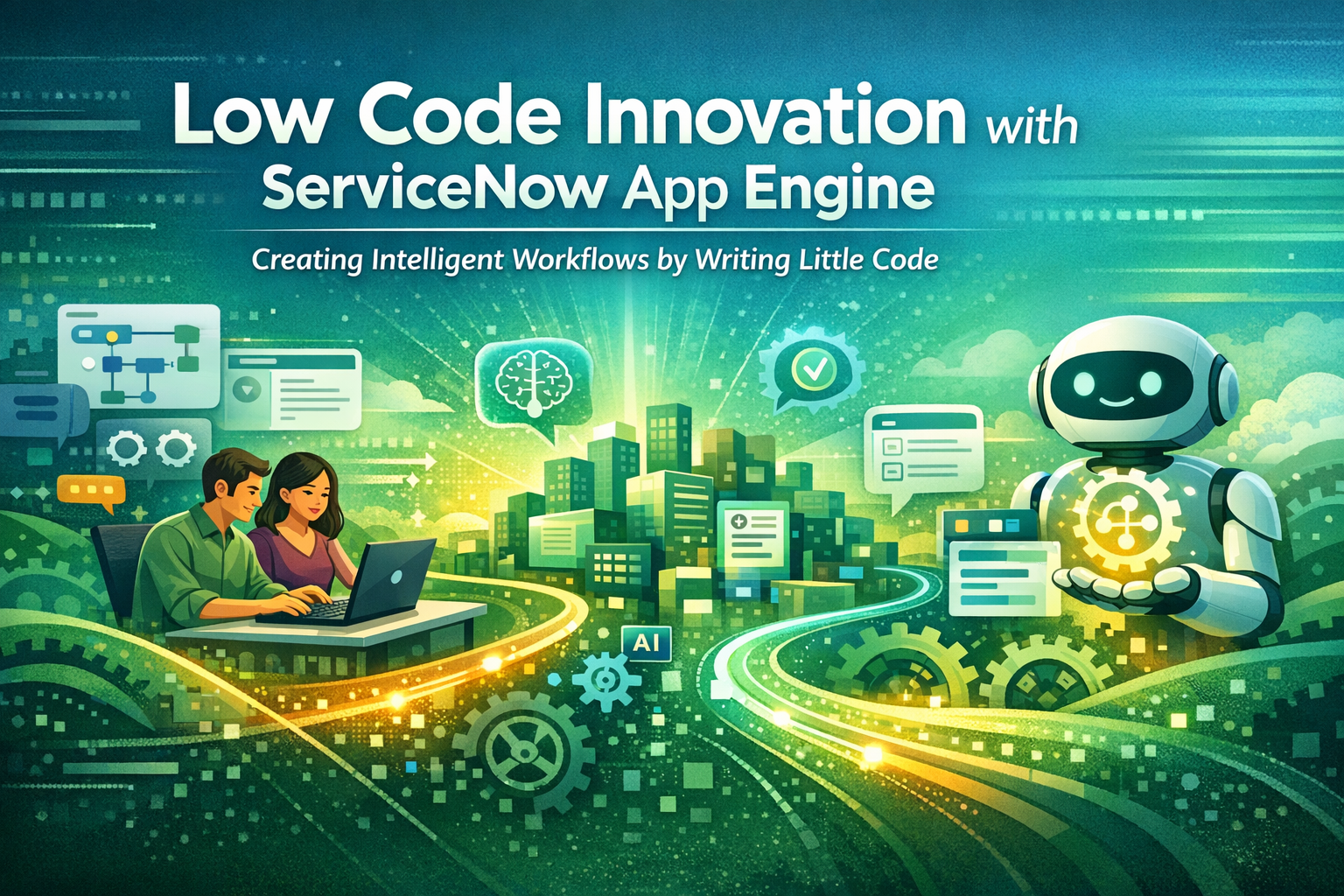
In the modern digital age, innovation has stopped being the preserve of programmers who spend years learning programming languages. This is a world where businesses are moving faster than ever before. Solutions are needed faster than ever before—and this is where the low-code platforms are revolutionizing the game with ServiceNow App Engine, which is more than a development tool.
“ServiceNow App Engine is not a substitute for developers. It is not a simplistic approach to technology. It is a means for bridging the gap from ideas to delivery,” says Robert Nasstrom, Market Director for the IT Business, at ServiceNow. “With a new application, organizations would be able to transform common operational issues into a working application in months, not to mention the costs.”
The Problem with Traditional Application Development
Application development, especially with
For a long time, the development of business applications was a predictable but very long process. Here is how it went:
- A problem was discovered by a business team.
- The solution was submitted to IT.
- There was writing and rewriting of requirements, approval and rejection of these requirements, and so on.
- When the application was finally built and available, the problem was already different – and might not even be around.
It led to frustration for both parties. Business people felt that their voices were not being heard, whereas the developer community had requests pouring in from all quarters. Innovation became stalled not for lack of ideas but for the lack of speed.
The ServiceNow App Engine was born out of this situation.
What makes ServiceNow App Engine unique?
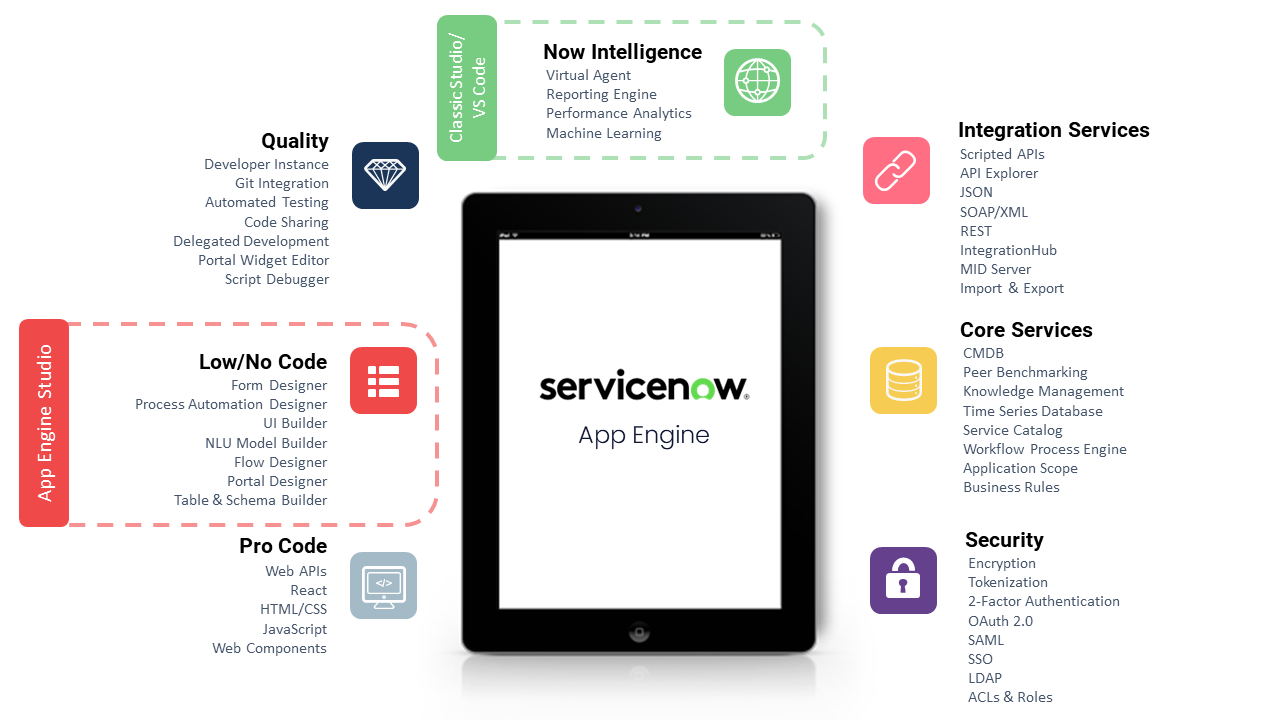
In essence, ServiceNow App Engine is a low-code development environment that is powered by Now Platform. This explanation is not even scratching the surface.
App Engine is unique in that it is a workflow-first platform. Unlike most software development platforms, App Engine begins with the work being done in an organization, as opposed to beginning with coding. Approvals, requests, escalations, and notifications are in the DNA of the platform.
Instead of writing applications, users construct solutions using:
- Visual process designers
- Visual process
- Prebuilt Data Tables
- Drag-and-drop interfaces
- Reusable workflow components
This helps to cut down on development time, but at the same time also provides reliability as well as security similar to enterprises.
Redefining Roles by Enabling “New Developers” Within
One of the most significant paradigm shifts brought about by App Engine is that of citizen developers. These individuals are not programmers but business analysts, system administrators, operations managers, or even human resource professionals who have an in-depth understanding of processes.
With App Engine:
- The author, a facilities manager, can create an app related to space requests.
- The HR department can establish an “onboarding” process through such a workflow.
- A compliance officer can monitor audits and approvals.
They don’t have to learn complex programming languages to be able to create applications easily. They simply translate their existing knowledge into applications directly.
This does not render the need for pro developers redundant. It enables them to dedicate their time to intricate integrations, optimization, and logic, with simpler workflow apps being developed closer to the business.
Speed Without Sacrificing Control
In A challenge that has arisen in relation to low-code platforms is the issue of governance. ServiceNow has a direct response to this.
Applications running under App Engine are created using the same environment that manages services like ITSM, HRSD, SecOps, and other enterprise services. This results in several benefits, including:
- Role-based access control is integrated.
- Data security adheres to platform standards.
- Applications are in line with the company’s policies.
A speed increase occurs in organizations with no chaos. Innovation occurs within the walls of the guidelines and never beyond them.
From Simple Forms to Intelligent Applications
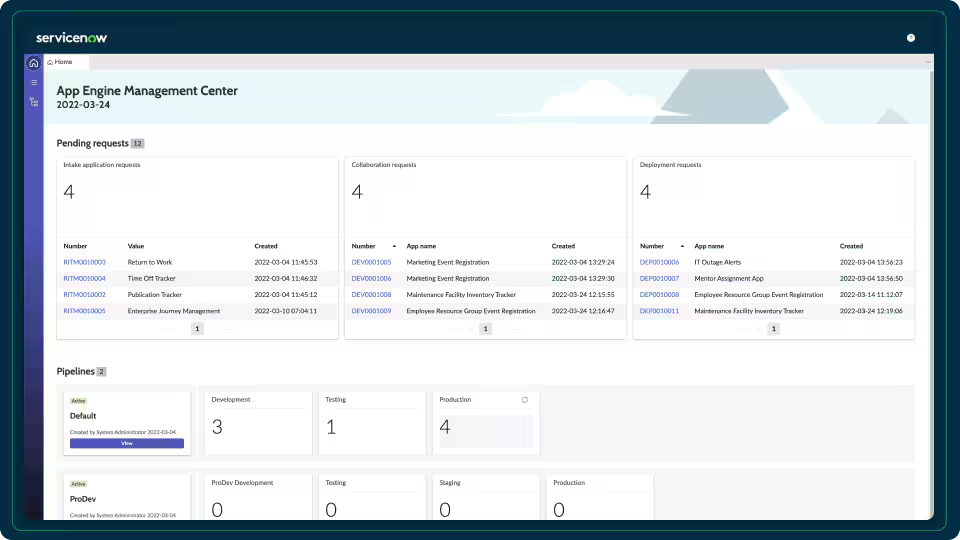
It’s been widely assumed that applications created with low-code technology are nothing more than transactional applications involving forms or approvals. Google App Engine defies this notion.
Web applications can be:
- Rules for business automation
- Flow Designer logic in complex workflows
- IntegrationHub spokes for external systems
- Performance Analytics for insights
- AI-driven Recommendations and Predictions
This begins with what amounts to a form request page that can expand into an entirely intelligent, adaptive, and learning function.
Real World Implications Surrounding Digital Transformation
Digital Transformation is talked about in large, generic concepts. But in reality, Digital Transformation happens in small, incremental steps.
Google’s application engine allows all organizations to:
- When
- Replace Spreadsheets with Structured Apps
- The
- Remove approvals from emails.
- Consolidate SIFT tools in one platform.
- Address manual errors and delays.
Although each of these applications solves a small problem, the group of applications forms a digital ecosystem where work can flow freely between the various offices of an enterprise.
Reasons Why App Engine Fosters the Innovation Culture
Besides technology, mindset changes are introduced through App Engine.
“When people know they can develop solutions themselves…”
- They experiment more
- They suggest solutions, not complaints.
- They view themselves as having ownership over Processes.
Innovation is no longer treated like a down-up process. Innovation is now embedded in the working culture.
This is quite subtle and has a profound impact. Organizations begin dealing with problems and evolve towards improving processes by doing more work.
The Future of Low-Code in the Context of ServiceNow
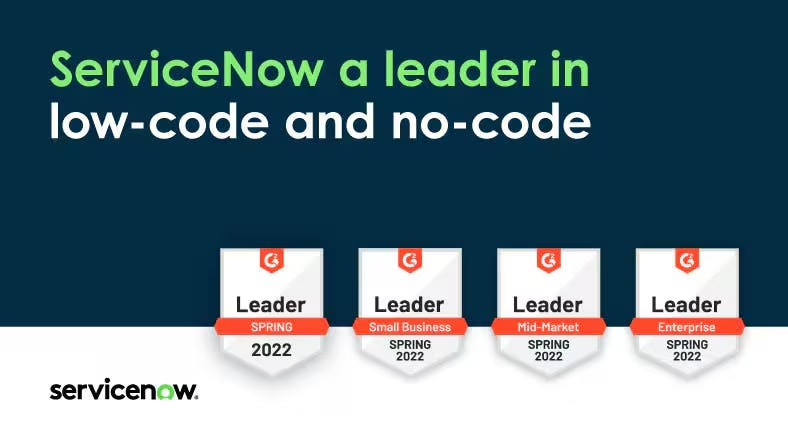
As ServiceNow is further integrating AI, automation, and analytics into its offerings, the App Engine is getting smarter, not just faster.
Future-ready apps will:
- Forecast bottlenecks before they materialize
- Propose optimization for workflows.
- Adapt to changing business requirements in real time.
Low-code development will no longer be about “simpler apps.” It will be about smarter systems built by people who understand the work best.
Final Thoughts
ServiceNow App Engine’s Low-Code Innovation is not a trend but a paradigm shift in how enterprises think when it comes to solution-building. It helps in breaking barriers between idea generation and execution in a way that maintains high standards. As an enabler for both technical and non-technical users, App Engine builds an environment that encourages innovation that is not only quick but also sustainable. In an era where speed is the name of the game, being agile spells the difference between success and failure. In an era where speed is the name of the game, tools such as App Engine are not just needed;